Heat Treatment (ISPM-15)
ISPM-15 certified heat treatment for international shipping compliance. Our certified facility ensures your wood packaging meets global phytosanitary standards.
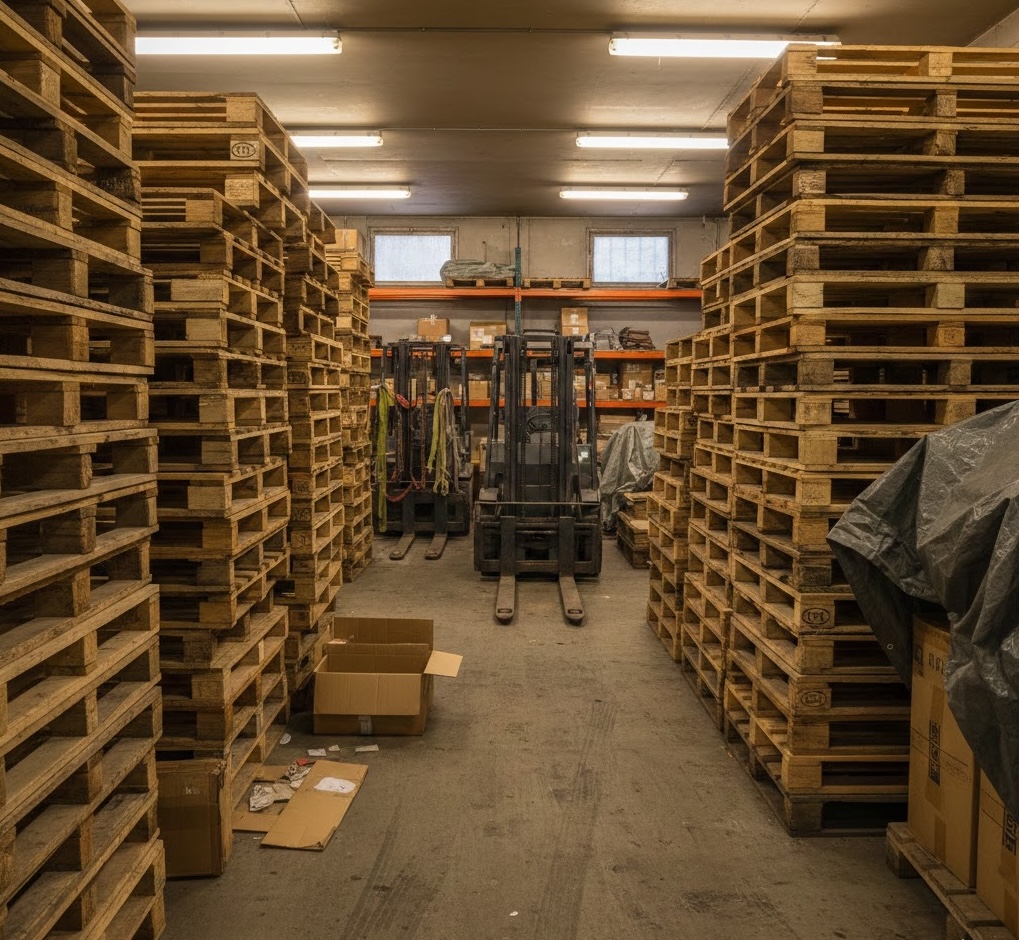
ISPM-15 Heat Treatment
Certified treatment for international shipping compliance
Request Heat Treatment Service
Need pallets treated for export? Tell us the quantity and timeline, and we'll provide pricing and schedule your treatment.
Frequently Asked Questions
What standards do your heat-treated pallets meet?+
All heat-treated pallets comply with ISPM-15 requirements and receive official IPPC stamps with documentation.
Can you heat-treat customer-owned pallets?+
Yes. We can process your pallets, apply required stamps, and return them with certificates for export use.
How long does heat treatment take?+
Typical kiln cycles run a few hours; scheduling depends on load size, but most orders complete within one business day.
Do you track treatment batches?+
We log batch data, timestamps, and temperatures for traceability and can share records for audits.
Can you deliver heat-treated pallets internationally?+
We supply ISPM-15 pallets ready for export; international freight can be arranged through partner carriers.
What Is ISPM-15?
ISPM-15 (International Standards for Phytosanitary Measures No. 15) is a set of guidelines developed by the International Plant Protection Convention (IPPC) that regulates the treatment of wood packaging materials used in international trade.
The standard was created to prevent the international spread of insects, nematodes, and plant diseases that can be carried in raw wood. It applies to all wood packaging materials (pallets, crates, dunnage) thicker than 6mm used in cross-border shipments.
Nearly every country in the world requires ISPM-15 compliance for imported wood packaging. Shipments arriving with non-compliant packaging face rejection, quarantine, or destruction at the port of entry -- resulting in costly delays and financial losses.
Key Facts About ISPM-15
Why Heat Treatment Is Required
Raw wood can harbor a variety of organisms that pose serious threats to agriculture and ecosystems when transported across borders. Heat treatment is the preferred method to eliminate these threats.
Invasive Insects
Wood-boring beetles, bark beetles, and other invasive insects can devastate forests in new environments. Heat treatment kills all life stages including eggs, larvae, and adults within the wood.
Pine Wood Nematode
The pine wood nematode (Bursaphelenchus xylophilus) has destroyed millions of pine trees in Asia and Europe. Heat treatment is the primary defense against this microscopic organism.
Fungal Pathogens
Wood-decay fungi and plant pathogens can spread to new forests and agricultural areas via untreated wood packaging. Heat treatment eliminates fungal spores and mycelium.
Biosecurity
Countries invest billions in agricultural biosecurity. Non-compliant wood packaging is one of the highest-risk pathways for pest introduction, which is why enforcement is strict.
Trade Compliance
Without ISPM-15 compliance, your shipment will be stopped at customs. This can result in delays of weeks, storage fees, reshipping costs, or total loss of the shipment.
Environmental Protection
The ISPM-15 framework has prevented countless ecological disasters since its adoption. It protects biodiversity and agricultural economies worldwide.
How We Heat Treat Your Pallets
Our heat treatment process follows strict ISPM-15 protocols and is monitored continuously to ensure full compliance.
Receiving & Inspection
Pallets arrive at our certified facility and are inspected for treatment suitability. We verify that the wood packaging meets the material requirements for heat treatment (solid wood, no composite materials).
Loading the Kiln
Pallets are loaded into our industrial heat treatment kilns. Loading is carefully managed to ensure proper airflow and uniform heat distribution throughout the entire batch.
Heat Treatment Cycle
The kiln is heated until the core temperature of the wood reaches a minimum of 56 degrees Celsius (132.8 degrees Fahrenheit). This temperature must be maintained for a minimum of 30 continuous minutes throughout the entire profile of the wood, including its core.
Temperature Monitoring
Multiple calibrated temperature probes are placed at the core of the thickest wood pieces to verify that the required temperature is achieved and maintained. All temperature data is recorded and archived.
Cooling & Stamping
After treatment, pallets are allowed to cool. Each treated unit receives the official IPPC stamp that includes our unique treatment facility code, country code, treatment method (HT), and the IPPC logo.
Documentation & Release
We provide complete treatment documentation including certificates of treatment, temperature records, and compliance statements. Your pallets are ready for international shipping.
Our Certification
We are an officially certified ISPM-15 heat treatment facility, authorized to treat and stamp wood packaging for international trade.
Facility Credentials
The ISPM-15 Stamp
After treatment, each pallet receives the official IPPC mark. This stamp is the internationally recognized proof that the wood packaging has been treated according to ISPM-15 standards. Here is what the stamp contains:
Documentation & Compliance
We provide complete documentation to support your international shipping requirements and customs clearance.
Certificate of Treatment
Official certificate documenting the treatment date, method, temperatures achieved, and duration for your shipment records.
Temperature Records
Complete temperature probe data showing core temperatures achieved during treatment, with time-stamped readings throughout the cycle.
Compliance Letter
A formal compliance statement on company letterhead confirming that treatment was performed per ISPM-15 requirements.
Batch Traceability
Every treatment batch is assigned a unique tracking number linking your pallets to their specific treatment cycle and documentation.
Re-Treatment Records
If pallets require re-treatment after repair or modification, we maintain complete records of all treatment cycles.
Customs Support
If customs officials at port of entry have questions about treatment compliance, we provide direct support and additional documentation as needed.
ISPM-15 Requirements Explained
Understanding ISPM-15 requirements in detail helps exporters avoid costly mistakes. Here is exactly what the standard demands.
Wood Thickness Threshold
ISPM-15 applies to all wood packaging materials made from raw wood exceeding 6mm in thickness. This includes pallets, crates, dunnage, collars, and any other solid wood packaging components used in international trade.
Core Temperature Requirement
The core temperature of the wood must reach a minimum of 56 degrees Celsius (132.8 degrees Fahrenheit) and be maintained at or above that temperature for a minimum of 30 continuous minutes. This is measured at the core of the thickest piece.
Debarking Requirement
All wood must be debarked before or during heat treatment. Any remaining bark pieces must not exceed 3cm in width (regardless of length) or 50 square centimeters total. Visual inspection confirms compliance.
Official IPPC Marking
Treated wood packaging must bear the official IPPC mark, applied by a certified facility. The mark must be legible, permanent, and placed in a visible location on at least two opposite sides of the packaging.
Re-treatment Requirements
If a treated pallet is repaired using untreated wood, the entire pallet must be re-treated and re-stamped. Even a single untreated replacement board invalidates the existing treatment certification.
Record Keeping
Treatment facilities must maintain complete records of every treatment batch including date, time, temperature probe data, batch identification, and the identities of treated units. Records must be kept for a minimum of two years.
ISPM-15: The Full Story
Understanding the history and rationale behind ISPM-15 helps exporters appreciate why compliance is non-negotiable and how the standard protects global ecosystems and economies.
Why ISPM-15 Was Created
In the late 1990s, a series of devastating invasive pest outbreaks traced to wood packaging materials prompted the international community to act. The Asian Longhorned Beetle, discovered in the United States in 1996, had arrived in untreated wooden crates from China and was destroying hardwood forests in New York and Illinois.
Simultaneously, the Pine Wood Nematode -- a microscopic worm that kills pine trees within weeks -- was spreading from North America to Asia and Europe through infested wood packaging. Entire forests in Portugal, Japan, and Korea were devastated.
In response, the Food and Agriculture Organization (FAO) of the United Nations tasked the International Plant Protection Convention (IPPC) with developing a global standard. The result was ISPM-15, first adopted in 2002 and revised in 2009 to strengthen debarking requirements.
Today, over 180 countries enforce ISPM-15, making it one of the most widely adopted international phytosanitary standards in history. It has prevented countless ecological disasters and is credited with significantly reducing the international spread of wood-borne pests.
Key Timeline
Asian Longhorned Beetle discovered in New York, traced to untreated Chinese wood packaging
IPPC begins developing international wood packaging treatment standard
ISPM-15 formally adopted by the Commission on Phytosanitary Measures
Major trading nations begin enforcement: EU, Canada, Australia, China
United States fully implements ISPM-15 import requirements
ISPM-15 revised to add debarking requirements and clarify exemptions
Methyl bromide phase-down begins under Montreal Protocol, shifting preference to heat treatment
180+ countries enforce ISPM-15; heat treatment is the dominant compliance method worldwide
Methyl Bromide vs Heat Treatment
ISPM-15 allows two treatment methods: heat treatment (HT) and methyl bromide fumigation (MB). Here is why heat treatment is the clear choice for modern exporters.
| Factor | Heat Treatment (HT) | Methyl Bromide (MB) |
|---|---|---|
| Method | Heating wood core to 56 degrees C for 30 minutes | Fumigation with methyl bromide gas in sealed chamber |
| Environmental Impact | No harmful chemicals; environmentally safe | Ozone-depleting substance; banned or restricted in many countries |
| Global Acceptance | Accepted by all 180+ ISPM-15 countries | Banned by EU, Canada, China, and many others for wood packaging |
| Worker Safety | No toxic chemicals; standard industrial safety | Highly toxic gas; requires specialized protective equipment |
| Effect on Wood | No chemical residue; does not affect wood integrity | Chemical residues may remain; some countries test for residue |
| Cost | Moderate; equipment investment offsets with efficiency | Lower per-treatment cost but regulatory costs increasing |
| Re-treatment | Simple -- re-heat and re-stamp after any repair | Re-fumigation required; more complex logistics |
| Future Outlook | Growing adoption; expected to become sole allowed method | Being phased out globally under Montreal Protocol |
Our recommendation: Heat treatment is the clear winner on every dimension that matters -- universal acceptance, environmental safety, worker health, and future-proofing. Methyl bromide is being phased out globally and is already banned by many major trading partners. We exclusively offer heat treatment (HT) at our facility.
Countries Requiring ISPM-15
Over 180 countries require ISPM-15 compliance for imported wood packaging. Here is a comprehensive overview of major trading destinations and their specific enforcement characteristics.
North America
Canada, Mexico, United States
Full enforcement at all border crossings. Canada and Mexico strictly enforce even for USMCA partners.
European Union
All 27 member states plus UK, Norway, Switzerland
Rigorous random inspections at seaports and land crossings. Non-compliance results in immediate quarantine.
East Asia
China, Japan, South Korea, Taiwan
China has some of the strictest enforcement globally. Japan and Korea are equally thorough.
Southeast Asia
Vietnam, Thailand, Indonesia, Philippines, Singapore
Growing enforcement. Singapore and Vietnam are particularly strict at seaports.
South Asia
India, Bangladesh, Sri Lanka, Pakistan
India has strengthened enforcement significantly in recent years. Pre-shipment compliance recommended.
Oceania
Australia, New Zealand
Strictest biosecurity in the world. Australia may require additional treatments beyond ISPM-15.
South America
Brazil, Argentina, Chile, Colombia, Peru
Brazil enforces rigorously. Chile has strict agricultural quarantine at all entry points.
Middle East & Africa
UAE, Saudi Arabia, South Africa, Nigeria, Kenya
Enforcement is growing. UAE and Saudi Arabia enforce at all seaports and airports.
Important: If you are shipping to any international destination, assume ISPM-15 compliance is required unless you have confirmed otherwise with the destination country's plant protection authority. The cost of non-compliance (rejected shipments, quarantine fees, cargo destruction) far exceeds the cost of treatment.
The HT Stamp Decoded
The ISPM-15 stamp (also called the IPPC mark or wheat sheaf mark) is the internationally recognized proof that wood packaging has been properly treated. Customs officials worldwide are trained to look for this mark and verify its components. Here is a complete breakdown of what each element means.
IPPC Logo (Wheat Sheaf)
The stylized grain symbol identifies this as an officially sanctioned IPPC mark. It is the universal identifier recognized by customs officials in every country.
Country Code (e.g., US)
The two-letter ISO 3166 country code identifies where the treatment was performed. US indicates treatment performed in the United States.
Treatment Provider Number
A unique numeric code assigned to the specific treatment facility. This number allows traceability back to the exact facility that performed the treatment.
Treatment Type (HT)
HT indicates heat treatment. MB would indicate methyl bromide fumigation. DH indicates dielectric heating. Our facility uses HT exclusively.
DB (Debarked)
DB confirms that the wood has been debarked in compliance with ISPM-15 requirements. All bark must be removed before or during treatment.
Stamp Placement Rules
Visibility
The stamp must be placed in a clearly visible location on the pallet. It should not be obscured by strapping, labels, or product placement.
Two-Side Marking
ISPM-15 recommends marking on at least two opposite sides of the pallet. Many customs agencies require this for easy inspection without moving cargo.
Permanence
The mark must be permanent and legible. It can be branded (burned), stenciled with indelible ink, or applied with a permanent marking device. Paint or temporary markers are not acceptable.
No Color Requirements
There is no required color for the stamp, but it must contrast enough with the wood to be easily readable. Black ink on natural wood is the most common approach.
No Red or Orange
Red and orange stamps are discouraged as they may be confused with quarantine or warning markings used by some countries' inspection services.
What Compliance Documentation You Receive
When you use our heat treatment service, you receive a comprehensive documentation package that provides everything you need for customs clearance and compliance verification.
Treatment Certificate
Temperature Records
Compliance Package
Common ISPM-15 Mistakes to Avoid
Exporters often make preventable mistakes that result in shipment delays, fines, or cargo destruction. Here are the most common errors and how to avoid them.
Using Non-Certified Providers
Only officially registered and audited facilities can perform ISPM-15 treatment. Using an uncertified provider means the stamps are invalid and your shipment will be rejected at customs.
Always verify your provider has a current IPPC registration and facility audit.
Repairing Treated Pallets with Untreated Wood
If even one board on a treated pallet is replaced with untreated wood, the entire pallet loses its ISPM-15 compliance. This is one of the most common mistakes exporters make.
If treated pallets are repaired, the entire pallet must be re-treated and re-stamped.
Illegible or Missing IPPC Stamps
Stamps that are faded, smeared, painted over, or positioned where they cannot be seen will cause customs officers to reject the pallet and potentially the entire shipment.
Verify stamps are clearly visible on at least two opposite sides before shipping.
Forgetting Dunnage and Blocking
ISPM-15 applies to ALL solid wood packaging, not just pallets. Wooden dunnage, blocking, bracing, and crating also require treatment and stamping. This is frequently overlooked.
Treat all wood packaging materials including dunnage, not just the pallets themselves.
Assuming Treatment Never Expires
While treatment technically does not expire, re-treatment is required if the pallet has been compromised -- repaired, modified, or re-manufactured. Some importers also require recent treatment dates.
Maintain treatment records and re-treat any pallets that have been altered since original treatment.
Shipping to Wrong Treatment Standard
Some countries accept only heat treatment (HT), not methyl bromide (MB). Australia, for example, has specific requirements beyond standard ISPM-15. Research destination country rules.
Confirm the specific requirements of your destination country before arranging treatment.
ISPM-15 by Region
While ISPM-15 is an international standard, enforcement and specific requirements vary by region. Here is what you need to know for major trading destinations.
European Union
StrictAll 27 EU member states
Rigorous enforcement at all ports of entry. EU requires ISPM-15 for all non-EU wood packaging. Random inspections are common. Non-compliant shipments face immediate quarantine.
Canada
StrictAll provinces and territories
CFIA (Canadian Food Inspection Agency) enforces ISPM-15 at all border crossings. Despite the close trading relationship with the US, compliance is mandatory and strictly monitored.
China
Very StrictMainland China, Hong Kong varies
China has some of the strictest enforcement globally. Customs officials inspect a high percentage of inbound shipments. Non-compliance can result in shipment destruction at the shipper's expense.
Australia & New Zealand
Extremely StrictAU, NZ
The strictest biosecurity controls in the world. Australia requires ISPM-15 plus additional treatments in some cases. All wood packaging is subject to inspection and may be fumigated on arrival.
Mexico & Latin America
Moderate to StrictMX, BR, AR, CL, CO, and more
Mexico requires ISPM-15 for all wood packaging from the US. Brazil and other Latin American countries enforce the standard with varying levels of inspection rigor.
Asia Pacific
Moderate to StrictJP, KR, IN, and Southeast Asia
Japan and South Korea have robust enforcement. India and Southeast Asian nations are strengthening enforcement annually. Compliance is required across the region.
Inside the Treatment Kiln
Our treatment facility uses industrial-grade kilns specifically designed and calibrated for ISPM-15 heat treatment. Here are the technical details of our process.
Kiln Capacity
Each kiln chamber holds up to 200 standard pallets per treatment cycle, allowing us to process large orders efficiently within a single day.
Temperature Control
Our kilns achieve temperatures up to 90 degrees C (194 degrees F) with precision control of plus or minus 1 degree. The ISPM-15 minimum of 56 degrees C is exceeded by a comfortable margin.
Core Probe Monitoring
A minimum of four calibrated temperature probes are inserted into the core of the thickest wood pieces in each batch. Data is logged every 60 seconds throughout the entire cycle.
Treatment Duration
A typical cycle runs 4-8 hours total, with the 30-minute minimum at core temperature easily achieved. Thicker wood or larger batches may require longer cycles.
Calibration Standards
All temperature probes are calibrated annually against NIST-traceable standards. Calibration certificates are maintained as part of our quality management system.
Treatment at a Glance
Heat Treatment FAQ
Do I need heat treatment for domestic shipments?
No. ISPM-15 heat treatment is only required for wood packaging materials used in international trade. Domestic shipments within the United States do not require treatment.
Can plastic or metal pallets be used internationally without treatment?
Yes. ISPM-15 applies only to solid wood packaging materials. Plastic, metal, plywood, particle board, and other manufactured wood products are exempt from the standard.
How long does heat treatment take?
The treatment cycle itself typically takes 4-8 hours depending on the wood thickness and kiln capacity. Most orders are completed within 1-3 business days from receipt at our facility.
Does heat treatment weaken the wood?
No. The temperatures used in heat treatment (56 degrees C / 132.8 degrees F) are well below levels that would affect wood structural integrity. Treated pallets retain their full load-bearing capacity.
How long does the treatment remain valid?
ISPM-15 treatment does not expire as long as the pallet is not repaired or remanufactured with untreated wood. If treated pallets are repaired, the entire unit must be re-treated.
What countries require ISPM-15 compliance?
Virtually all countries that participate in international trade require ISPM-15 compliance, including the EU, Canada, China, Japan, Australia, Mexico, Brazil, and over 180 other nations.
What happens if my shipment is found non-compliant at customs?
Non-compliant shipments may be rejected outright and returned at the shipper's expense, placed in quarantine pending treatment at a local facility (at significant cost), or in the worst case, destroyed entirely. The financial consequences can be severe, often exceeding the value of the goods being shipped.
Can I bring my own pallets for treatment, or do I need to buy them from you?
Both options are available. You can bring your own pallets to our facility for treatment, or you can purchase pre-treated pallets from our inventory. If bringing your own, ensure the pallets are made of solid wood and are properly debarked.
Do you offer pick-up and delivery for heat treatment orders?
Yes. We can pick up your pallets, treat them at our facility, and deliver them back to you fully certified and stamped. This end-to-end service is popular with exporters who want hassle-free compliance.
Ship Internationally With Confidence
Ensure your wood packaging meets ISPM-15 standards. Contact us for heat treatment pricing and scheduling.