Frequently Asked Questions

Find quick answers to the most common questions about our pallet products, services, pricing, and delivery.
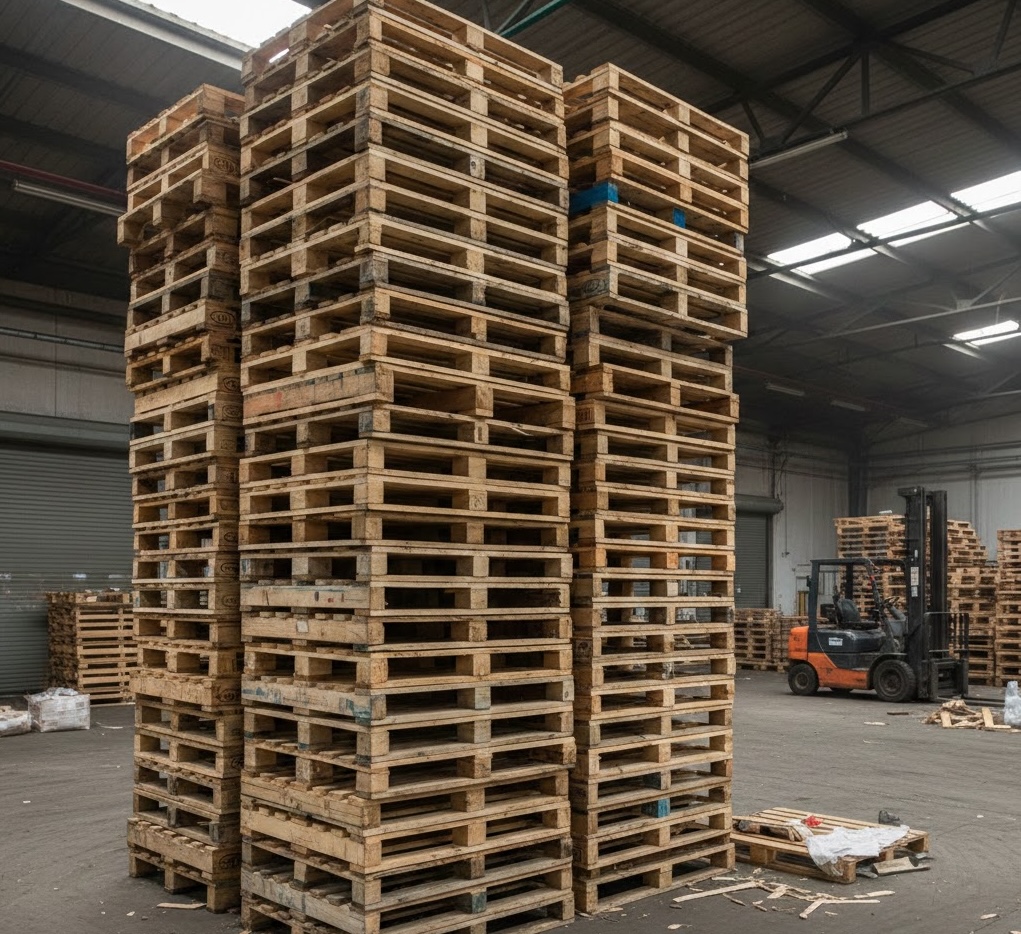
Tall stacks of used wood pallets in warehouse

Frequently Asked Questions

Everything you need to know about pallets, pricing, and our services

Still Have Questions? Contact Us

Can't find the answer you're looking for? Send us a message and we'll get back to you within 24 hours.

US state or Canadian province (e.g. FL, ON)

US ZIP (60601) or Canadian (M5V 2T6)

US / Canada: (XXX) XXX-XXXX

By submitting, you agree to our Privacy Policy. We'll respond within 24 hours.

General

What is Pallets Resale?
Pallets Resale is a full-service pallet company based in Tampa, FL. We buy, sell, recycle, repair, and transport pallets across the United States. Our mission is to promote sustainability through the circular economy by giving every pallet a second life.
What areas do you serve?
We serve the entire United States, with a primary focus on the Southeast region including Florida, Georgia, Alabama, South Carolina, North Carolina, and Tennessee. For large orders, we offer nationwide delivery. Contact us to discuss logistics for your specific location.
How do I get a quote?
Getting a quote is easy and free. You can fill out the contact form on our website, or email us at [email protected]. Please include the type and size of pallets you need, the quantity, your location, and any specific requirements. We typically respond within 24 hours.
Do I need to create an account to place an order?
No account is needed. Simply contact us through our website or email with your requirements and we will provide a quote. For recurring orders, we can set up a business account with preferred pricing and streamlined ordering.
How long has Pallets Resale been in business?
We have over 15 years of experience in the pallet industry. Our team brings decades of combined expertise in pallet sourcing, grading, repair, recycling, and logistics. This deep industry knowledge allows us to provide competitive pricing and reliable service to businesses of all sizes.
Can I visit your facility before placing an order?
Absolutely. We welcome visitors at our Tampa facility during regular business hours, Monday through Friday from 7:00 AM to 5:00 PM EST. We recommend scheduling an appointment in advance so a team member can give you a tour and discuss your pallet requirements in person. Saturday visits are available by appointment only.

Ordering Process

What is the step-by-step ordering process?
Our ordering process is straightforward: (1) Submit your request via our contact form, email, or phone with details about the pallets you need. (2) Receive a detailed quote within 24 hours, usually within 4 to 6 hours during business days. (3) Review and approve the quote. (4) We prepare your order from inventory or schedule production for custom requests. (5) Delivery is coordinated to your preferred date and location. (6) Pallets are inspected one final time before loading onto the truck.
Is there a minimum order quantity?
There is no strict minimum for pickup orders at our Tampa facility. For deliveries, we recommend a minimum of 50 pallets to keep shipping costs reasonable. However, we work with businesses of all sizes and can discuss options for smaller quantities. For orders under 50 units, local pickup from our Tampa location is often the most cost-effective option.
How far in advance should I place my order?
For standard sizes in stock (such as 48x40 GMA pallets), we can often fulfill orders within 1 to 3 business days. For larger quantities (500 or more pallets), custom sizes, or specialty requirements like ISPM-15 heat treatment, we recommend placing your order 5 to 10 business days in advance. Recurring orders can be set up on a scheduled basis to ensure pallets are always ready when you need them.
Can I modify or cancel an order after placing it?
Yes, orders can be modified or canceled before they ship at no charge. Once an order is loaded for delivery, cancellation may incur a restocking and transportation fee. For custom-manufactured pallets, modifications may be limited once production has begun. We encourage you to contact us as soon as possible if your requirements change.
Do you offer recurring or standing orders?
Yes, we offer standing order programs for businesses with predictable pallet needs. You can set up weekly, biweekly, or monthly deliveries at pre-agreed quantities and pricing. Standing orders receive priority fulfillment and often qualify for additional volume discounts. Your dedicated account manager handles all scheduling and adjustments.

Products

What types of pallets do you sell?
We sell wood pallets (new and used), plastic pallets, metal pallets, and specialty pallets. Our wood pallets are available in all standard sizes including 48x40 (GMA), 42x42, 48x48, 48x45, 36x36, and many more. We also offer custom sizes to meet specific requirements.
What pallet grades are available?
We offer three standard grades. Grade A (Like New): minimal wear, all boards intact, clean appearance. Grade B (Good Condition): some cosmetic wear, fully functional, may have minor repairs. Grade C (Economy): visible wear, structurally sound, most affordable option. All grades are inspected for structural integrity before sale.
Do you sell ISPM-15 heat-treated pallets?
Yes, we offer ISPM-15 heat-treated pallets for international shipping. All heat-treated pallets bear the official IPPC stamp certifying compliance. We can also heat-treat pallets you already own at our certified facility.
Can you provide custom-sized pallets?
Absolutely. We manufacture custom pallets to any specification. Whether you need oversized pallets for heavy machinery, miniature pallets for retail displays, or specific configurations for automated systems, our team can design and build exactly what you need. Custom orders typically require 5 to 10 business days.
What is the difference between a stringer pallet and a block pallet?
Stringer pallets use two or three long boards (stringers) running the length of the pallet to support the deck boards. They are the most common type in North America and are typically less expensive. Block pallets use blocks of solid wood at the corners and center to support the deck, allowing four-way forklift entry from all sides. Block pallets are generally stronger and preferred for heavier loads or automated warehouse systems.
What is the load capacity of a standard 48x40 pallet?
A standard 48x40 GMA pallet in good condition (Grade A or B) typically supports a static load of up to 2,500 pounds and a dynamic load (while being moved by forklift) of approximately 2,800 pounds. Racking capacity, which applies when pallets are supported only at the edges on pallet racks, is generally around 2,200 pounds. Actual capacity depends on the specific construction, wood species, and condition of the pallet. We can advise on the best option for your load requirements.
Do you carry specialty pallets for specific industries?
Yes, we supply specialty pallets for a range of industries. This includes food-grade pallets that meet FDA and FSMA requirements, pharmaceutical pallets with chemical-resistant coatings, export pallets compliant with ISPM-15, heavy-duty pallets for automotive and manufacturing, and display pallets for retail environments. Contact us with your industry-specific needs and we will recommend the best solution.

Pallet Grades Explained

What exactly qualifies as a Grade A pallet?
A Grade A pallet is in like-new condition. All deck boards and stringers or blocks are intact with no cracks, splits, or missing pieces. The pallet shows minimal cosmetic wear, no significant staining, and no protruding nails. Grade A pallets are ideal for retail-facing shipments, export loads, and any application where appearance and consistent quality matter. They have been used only once or twice before being resold.
When should I choose Grade B pallets over Grade A?
Grade B pallets are the best value for most commercial and industrial applications. They are fully functional and structurally sound, with some cosmetic wear such as scuff marks, minor discoloration, or small repairs. Choose Grade B when pallets will be used for internal warehouse operations, non-retail shipments, or applications where function matters more than appearance. Grade B typically costs 30 to 40 percent less than Grade A.
Are Grade C pallets safe to use?
Yes, all Grade C pallets we sell are structurally inspected and deemed safe for their rated load capacity. Grade C pallets show visible wear including surface staining, repaired boards, and cosmetic blemishes, but they remain fully functional for shipping, storage, and material handling. They are the most economical option and are ideal for one-way shipments, internal storage, or applications where cost savings are the priority.
Can I mix pallet grades in a single order?
Absolutely. Many customers order a mix of grades to optimize their budget. For example, you might use Grade A pallets for outbound customer-facing shipments and Grade C pallets for internal warehouse use or storage. Our team can help you determine the right grade mix based on your specific use cases and budget.

Services

Do you buy used pallets?
Yes, we buy used pallets of all types, sizes, and conditions. Whether you have a few dozen surplus pallets or thousands to offload, we provide competitive pricing and can arrange pickup from your location. Contact us with details about your pallets (type, size, quantity, condition, and location) for a buying quote.
Do you offer pallet repair services?
Yes, we offer professional pallet repair services. Our technicians can replace broken deck boards, reinforce stringers, re-nail loose components, and restore pallets to working condition. Repairing pallets costs significantly less than replacing them and extends their useful life by multiple cycles.
What recycling services do you provide?
Our recycling program handles pallets at every stage of their lifecycle. Reusable pallets are inspected, graded, and resold. Repairable pallets are reconditioned. Pallets beyond repair are dismantled and the wood is recycled into mulch, animal bedding, biomass fuel, or engineered wood products. We ensure zero waste from our recycling operations.
Do you provide transportation and logistics?
Yes, we handle all transportation needs. We can deliver pallets to your facility and pick up used pallets for recycling or repurchase. We operate our own fleet and also partner with trusted carriers for nationwide coverage. Delivery scheduling is flexible to accommodate your operations.
What does the pallet repair process involve?
Our repair process begins with a thorough inspection where each pallet is assessed for structural issues. Damaged deck boards are removed and replaced with boards of matching dimensions. Cracked or broken stringers are reinforced with companion stringers or replaced entirely. All nails are checked and re-driven or replaced as needed. Finally, repaired pallets go through a quality check to ensure they meet the required grade specifications before being returned to service.
Can you manage my entire pallet program?
Yes, we offer full pallet management services for businesses that want to outsource their pallet operations. This includes inventory assessment, regular supply of new and used pallets, scheduled pickups of damaged or surplus pallets, on-site sorting at your facility, repair and reconditioning, and detailed reporting on usage, costs, and sustainability metrics. A dedicated account manager coordinates everything so you can focus on your core business.

Pricing

How much do used pallets cost?
Used pallet pricing varies based on size, grade, quantity, and market conditions. As a general range, standard 48x40 GMA pallets typically cost between $4 and $12 for Grade C, $7 and $15 for Grade B, and $10 and $20 for Grade A. Volume discounts are available for larger orders. Contact us for a specific quote based on your needs.
Do you offer volume discounts?
Yes, we offer significant volume discounts for orders of 100 pallets or more. The more you order, the better the per-unit pricing. We also offer preferred pricing programs for businesses with recurring pallet needs. Contact us to discuss volume pricing for your specific requirements.
What payment methods do you accept?
We accept all major payment methods including credit cards, ACH bank transfers, wire transfers, and company checks. For established business accounts, we offer Net 30 payment terms upon credit approval. All quotes include payment terms and any applicable delivery fees.
Are there any hidden fees?
No. We believe in transparent pricing. Your quote will include the pallet cost, any applicable delivery or pickup fees, and taxes if required. There are no hidden surcharges, handling fees, or unexpected charges. The price we quote is the price you pay.
Do pallet prices fluctuate seasonally?
Yes, pallet pricing can vary with market conditions. Prices tend to increase during peak shipping seasons, particularly in the fourth quarter (October through December) when holiday shipping drives up demand. Lumber costs, supply chain conditions, and regional availability also affect pricing. Locking in a standing order agreement can help stabilize your costs and protect against seasonal price increases.
What are your payment terms for business accounts?
We offer flexible payment terms for qualified businesses. Standard terms include Net 30 upon credit approval, meaning payment is due within 30 days of the invoice date. For new customers, we may require prepayment or COD (cash on delivery) for the first few orders until a credit relationship is established. Larger accounts may qualify for Net 45 or Net 60 terms. We also offer early payment discounts of 2 percent for invoices paid within 10 days.
What is your returns and refund policy?
We stand behind the quality of every pallet we sell. If pallets arrive damaged during transit or do not match the quoted grade and specifications, we will replace them at no charge or issue a full refund. Claims must be submitted within 48 hours of delivery with photographs of the issue. For pallets that simply do not meet your needs, returns are accepted within 7 days in original condition, subject to a restocking fee. Custom-manufactured pallets are non-returnable unless defective.

Delivery

How long does delivery take?
Delivery times depend on your location and order size. For the greater Tampa Bay area and surrounding Southeast states, standard delivery is typically 1 to 3 business days. Nationwide delivery ranges from 3 to 7 business days depending on distance. Rush delivery options are available for urgent orders.
What is the minimum order for free delivery?
Free delivery is available for orders of 200 pallets or more within our primary service area (within 150 miles of Tampa). For smaller orders or longer distances, delivery fees are calculated based on quantity and distance. We always include delivery costs in your quote so there are no surprises.
Can you pick up pallets from my location?
Yes, we offer pickup services for used pallets you want to sell or recycle. Pickup scheduling is flexible and can be arranged as a one-time service or on a recurring basis. For ongoing pallet management programs, we can set up regular pickup schedules that align with your operations.
Do I need a loading dock to receive a delivery?
A loading dock makes the process faster, but it is not strictly required. Our delivery trucks are equipped with liftgates that can lower pallets to ground level. If you do not have a loading dock, please let us know when scheduling your delivery so we can send an appropriately equipped truck. You will need a forklift or pallet jack on-site to move the pallets from the truck to your storage area.
Can I track my delivery?
Yes. Once your order ships, we provide a tracking number and estimated delivery window. For deliveries within our own fleet service area, our dispatch team can provide real-time updates on the day of delivery. For shipments via partner carriers, you will receive standard freight tracking information. We also confirm delivery completion with a signed proof of delivery.
What happens if my delivery arrives damaged?
If pallets arrive damaged during transit, please note the damage on the delivery receipt at the time of receipt and contact us within 48 hours with photographs. We will arrange a replacement shipment at no additional cost or issue a credit to your account. Our loading procedures and quality checks minimize transit damage, but we stand behind our deliveries if issues occur.

International Shipping

What is ISPM-15 and why does it matter for international shipping?
ISPM-15 (International Standards for Phytosanitary Measures No. 15) is a set of guidelines developed by the International Plant Protection Convention (IPPC) to prevent the spread of pests and diseases through wood packaging materials used in international trade. It requires that wood pallets be heat-treated to a core temperature of 56 degrees Celsius for at least 30 minutes or fumigated with methyl bromide. Any pallet used for international shipping must bear the IPPC compliance stamp. Non-compliant pallets can be rejected at customs, causing costly delays.
Can you heat-treat pallets I already own?
Yes, we operate a certified heat treatment facility and can process your existing pallets to ISPM-15 compliance. The turnaround time is typically 2 to 3 business days. Each treated pallet receives the official IPPC stamp. This service is ideal if you already have pallets in good condition but need them certified for an upcoming international shipment.
Do you ship pallets internationally?
Our primary service area is the continental United States. However, we can supply ISPM-15 compliant pallets to ports and freight forwarders for international shipments. We regularly work with businesses that ship goods to Canada, Mexico, Europe, and Asia. We can coordinate delivery to any US port or logistics hub where your international freight is staged.
Are plastic pallets exempt from ISPM-15 requirements?
Yes, plastic pallets are exempt from ISPM-15 requirements because they are not made of raw wood material and therefore do not carry the risk of harboring wood-boring pests. If you frequently ship internationally and want to avoid the heat treatment process entirely, plastic pallets can be a convenient option. We stock a range of plastic pallet sizes suitable for export use.

Sustainability

How does pallet recycling help the environment?
Pallet recycling reduces deforestation by reusing existing wood resources, decreases landfill waste, lowers carbon emissions compared to manufacturing new pallets, and conserves the energy required for new pallet production. Every recycled pallet saves approximately 3.5 board feet of new lumber. Our zero-waste process ensures that even pallets beyond repair have their materials fully recovered and repurposed.
What happens to pallets that cannot be repaired?
Pallets that are beyond repair are never wasted. They are dismantled and the wood is sorted for various secondary uses: clean wood becomes mulch or animal bedding, larger pieces are used in landscape construction, and remaining material is processed into biomass fuel for energy production. We maintain a true zero-waste-to-landfill commitment.
Do you provide sustainability reports for customers?
Yes, for business customers with ongoing accounts, we can provide sustainability impact reports detailing the number of pallets recycled, estimated trees saved, carbon emissions avoided, and landfill waste diverted. These reports can support your corporate sustainability reporting and ESG (Environmental, Social, and Governance) initiatives.
What is the carbon footprint difference between new and recycled pallets?
Manufacturing a new wooden pallet produces approximately 27 to 31 kilograms of CO2 equivalent emissions when accounting for logging, transportation, sawmilling, and assembly. A recycled or repaired pallet requires only a fraction of that energy, typically reducing the carbon footprint by 60 to 80 percent compared to new production. By choosing recycled pallets, a business ordering 1,000 pallets per month can avoid roughly 20 to 25 tons of CO2 emissions annually.
What is pallet pooling and is it more sustainable than buying?
Pallet pooling is a model where pallets are rented from a pooling company (such as CHEP or PECO) rather than purchased outright. The pooling company manages the lifecycle, including repair, retrieval, and redistribution. Pooling can be more sustainable for some businesses because it optimizes pallet utilization and reduces the total number of pallets in circulation. However, it involves ongoing rental fees and retrieval requirements. We can help you compare the total cost and environmental impact of pooling versus purchasing to determine the best approach for your operation.

Storage and Handling

What is the best way to store pallets outdoors?
If outdoor storage is necessary, stack pallets on a level, well-drained surface to prevent water pooling. Elevate the bottom pallet off the ground using concrete blocks or treated lumber to allow air circulation and prevent moisture absorption. Limit stack height to 15 pallets or fewer for safety. Cover stacks with tarps or weatherproof covers to protect from rain and direct sunlight, which can cause warping and premature deterioration. Rotate inventory regularly to prevent prolonged exposure.
How high can I safely stack empty pallets?
For safety, we recommend stacking empty pallets no higher than 15 units on a flat, stable surface. In warehouse environments with concrete flooring and no wind exposure, stacks of up to 20 pallets may be acceptable depending on your facility safety standards. Always ensure stacks are uniform and straight. Leaning or uneven stacks are a tipping hazard. Follow your local OSHA guidelines and facility safety policies for specific requirements.
How can I extend the lifespan of my pallets?
Proper handling and storage are the most effective ways to extend pallet life. Avoid dropping loaded pallets or dragging them across rough surfaces. Train forklift operators to center their forks properly when lifting to prevent board damage. Store pallets in dry, covered areas when possible. Inspect pallets regularly and repair minor damage promptly before it worsens. With proper care, a well-built wood pallet can last through 15 to 20 or more use cycles.
Should I be concerned about pests in wood pallets?
Pest risk is low for pallets that have been heat-treated (HT) according to ISPM-15 standards, as the treatment eliminates insects and larvae. For used pallets that have not been heat-treated, inspect for signs of boring insects such as small holes in the wood or sawdust deposits. Store pallets away from building structures when possible and do not use pallets that show evidence of active infestation. If you have concerns, we can supply heat-treated pallets or treat your existing inventory at our facility.

Regulations and Compliance

What are GMA pallet specifications?
GMA (Grocery Manufacturers Association) pallets are the most widely used pallet standard in North America. The standard GMA pallet measures 48 inches by 40 inches, uses a stringer design with three stringers, has a four-way entry configuration (partial on the stringer sides, full on the notched ends), and weighs approximately 30 to 48 pounds depending on wood species. GMA pallets are designed for use in grocery, retail, and general freight applications and are compatible with standard racking, conveyor, and automated handling systems.
Are there regulations for pallets used in the food industry?
Yes, pallets used for food products must comply with FDA food safety requirements and the FSMA (Food Safety Modernization Act) guidelines. This generally means pallets should be clean, dry, free of mold and contaminants, and in good structural condition. Many food companies require Grade A or Grade B pallets, and some require heat-treated or plastic pallets for direct food contact. We supply food-grade pallets that meet these requirements and can advise on the specific standards your application requires.
What is NWPCA and do your operations follow their guidelines?
The NWPCA (National Wooden Pallet and Container Association) is the leading industry trade association representing wood pallet and container manufacturers, recyclers, and distributors in North America. NWPCA establishes best practices for pallet design, manufacturing, repair, and recycling. Our operations follow NWPCA guidelines, including their Pallet Design System (PDS) for structural specifications and their recommended practices for pallet repair and recycling.
Do pallets need to comply with any fire safety regulations?
Fire safety regulations for pallets vary by jurisdiction and application. In general, stored pallets should follow NFPA (National Fire Protection Association) guidelines, particularly NFPA 13 for sprinklered warehouses. Key considerations include limiting stack heights, maintaining proper aisle spacing, and ensuring fire suppression systems are adequate for the volume of combustible material stored. Some facilities and industries may require fire-retardant treated pallets. We can supply fire-retardant pallets upon request for environments where this is required.
More Answers

Additional Questions

Detailed answers to more specific questions organized by category to help you find exactly what you need.

Ordering & Pricing Details

What is the minimum order for bulk discount pricing?
Bulk discount pricing begins at 100 pallets. Orders of 100-249 pallets receive a 5-8% discount off standard pricing. Orders of 250-499 receive 10-12% off. Orders of 500 or more receive our best volume pricing, typically 15-20% below standard rates. These discounts apply to both new and recycled pallets of all grades and sizes.
Can I get a price lock for recurring orders?
Yes. For customers who commit to a standing order agreement of six months or longer, we offer price lock guarantees that protect you from market fluctuations. Your agreed-upon per-pallet price remains fixed for the contract term regardless of changes in lumber costs or market demand. This is particularly valuable during peak shipping seasons when spot prices can increase 10-15%.
Do you offer financing or extended payment terms for large orders?
For qualified business customers, we offer flexible payment terms beyond our standard Net 30. This includes Net 45 and Net 60 options for established accounts, as well as structured payment plans for exceptionally large orders (5,000+ pallets). We also offer a 2% early payment discount for invoices settled within 10 days. New customers can begin building credit history with us through COD or prepaid orders.
How do I get the most accurate quote possible?
To receive the most precise quote, provide the following details: exact pallet size (length x width), preferred grade (A, B, or C), quantity needed, delivery address with zip code, desired delivery date, whether you need ISPM-15 heat treatment, any special requirements such as specific wood species or construction type, and whether this will be a one-time or recurring order. The more detail you provide, the faster and more accurately we can quote.
Are delivery fees included in your pallet prices?
Pallet prices and delivery fees are quoted separately for transparency. Delivery is free for orders of 200 or more pallets within 150 miles of our Tampa facility. For all other deliveries, freight costs are calculated based on distance, quantity, and access requirements and clearly stated on your quote. There are never hidden surcharges or handling fees added after the fact.

Delivery & Logistics Details

What types of trucks do you use for delivery?
We use a variety of vehicles depending on order size and destination. Small orders (under 200 pallets) are typically delivered on flatbed trucks or box trucks with liftgates. Larger orders use full tractor-trailer rigs. For local Tampa Bay deliveries, we operate our own fleet. For regional and nationwide shipments, we partner with trusted LTL and FTL carriers. All trucks are equipped with appropriate tie-down equipment to secure pallets during transit.
Can I schedule a specific delivery window?
Yes. For deliveries within our own fleet service area (Tampa Bay and surrounding counties), we can schedule deliveries within a 2-hour window. For regional deliveries via partner carriers, we coordinate morning (7 AM to 12 PM) or afternoon (12 PM to 5 PM) delivery windows. Exact time scheduling is available for an additional fee on time-critical deliveries. We always confirm the delivery date and window at least 24 hours in advance.
Do you deliver to construction sites and temporary locations?
Yes, we deliver to construction sites, temporary warehouses, event venues, and other non-standard locations. For these deliveries, please provide specific site access instructions, any gate codes or check-in procedures, the name and phone number of an on-site contact, and any restrictions on vehicle size or delivery hours. A flatbed truck with a forklift may be required for sites without loading docks.
What states do you deliver to most frequently?
Our highest delivery volume is in the Southeast: Florida, Georgia, Alabama, South Carolina, North Carolina, and Tennessee. We also have strong shipping lanes to Texas, Virginia, Maryland, Pennsylvania, New York, New Jersey, Ohio, Indiana, and Illinois. However, we deliver to all 50 states in the continental U.S. and can arrange shipments to Alaska and Hawaii upon request.

Pallet Quality & Inspection

How do you inspect pallets before sale?
Every pallet goes through a multi-point inspection process. We check for structural integrity of all stringers or blocks, verify that all deck boards are securely fastened with no missing or severely cracked boards, ensure there are no protruding nails or sharp edges, check overall dimensions against the specified tolerances, assess cosmetic condition for grading purposes, and verify ISPM-15 marks where applicable. Pallets that do not meet our standards for any grade are diverted to our recycling program.
Do your pallets come with a quality guarantee?
Yes. Every pallet we sell is guaranteed to meet the specifications of its stated grade at the time of delivery. If a pallet arrives damaged during transit or does not match the quoted grade, we will replace it at no charge or issue a credit to your account. Claims must be submitted within 48 hours of delivery with photographs documenting the issue. We maintain a defect rate below 2% across all grades.
What wood species do you use in your pallets?
Our pallets are made from a variety of North American wood species. Softwoods include Southern Yellow Pine, Spruce, and Douglas Fir, which are lighter and more affordable. Hardwoods include Oak, Maple, and Poplar, which are denser and stronger but heavier. The specific species depends on regional availability and customer requirements. If you need a specific wood species for your application, such as oak for heavy loads or pine for lighter weight, let us know when requesting a quote.
How do you handle pallets with mold or mildew?
Mold on wood pallets is a natural occurrence, especially in humid climates like Florida. Surface mold does not compromise structural integrity but may be unsuitable for food-grade applications. Pallets with surface mold are cleaned, dried, and downgraded appropriately. Pallets with deep mold penetration are removed from resale inventory. For food-grade orders, we specifically select pallets from our heat-treated, mold-free inventory stored in covered, climate-controlled areas.

Technical Questions

What is the difference between static, dynamic, and racking load capacity?
Static load capacity is the maximum weight a pallet can hold when sitting on a flat, level surface without being moved, typically the highest rating. Dynamic load capacity is the maximum weight when the pallet is being lifted and transported by a forklift, usually 40-60% of the static load due to movement stresses. Racking load capacity is the weight limit when the pallet rests on racking beams with only the edges supported, often the lowest rating because the center spans unsupported. Always use the appropriate rating for your application to avoid pallet failure.
Can pallets be pressure-treated or chemically treated?
Yes, pallets can receive various chemical treatments for specific applications. Pressure-treated pallets use preservatives like ACQ or copper azole to resist rot and insect damage, making them suitable for permanent outdoor use. Fire-retardant treatments are available for environments where combustion risk must be minimized. However, chemically treated pallets should never be used for food-contact applications. For international shipping, heat treatment (HT) under ISPM-15 is the preferred method as it avoids chemical residues entirely.
What nail or fastener type is best for pallet construction?
Helically threaded (spiral) nails and annularly threaded (ring-shank) nails are the industry standard for pallet construction. These threaded fasteners provide 50-100% greater withdrawal resistance compared to smooth-shank nails, which is critical because pallets endure repeated impact and vibration during handling. The NWPCA recommends threaded nails for all pallet construction. Nail length should be sufficient to penetrate both the deck board and stringer without protruding through the opposite side. Typical nail lengths are 2.25 to 2.5 inches for standard deck board thicknesses.
How many times can a wood pallet be reused?
A well-built wood pallet in a typical supply chain can make 15 to 20 or more one-way trips before requiring retirement. Pallets used in closed-loop systems with careful handling can last even longer. The actual lifespan depends on the pallet grade and construction quality, how carefully it is handled by forklift operators, whether it is stored properly between uses, the weight and nature of the loads it carries, and whether minor damage is repaired promptly. Regular inspection and proactive repair can significantly extend pallet life.
What is a close-boarded or full-deck pallet?
A close-boarded (or full-deck) pallet has no gaps between the top deck boards, creating a continuous flat surface. This design is used when shipping small items that could fall through standard deck board spacing, fragile items that need uniform support, or products that require a smooth surface for automated conveyor systems. Close-boarded pallets use more lumber and therefore cost more and weigh more than standard-spacing pallets, but they provide superior load support for certain applications.

Still Have Questions?

Our team is standing by to help with any pallet-related question, no matter how specific or technical.

Call Us

(813) 555-0192

Mon - Fri, 7:00 AM - 5:00 PM EST

Email Us

[email protected]

We respond within 24 business hours

At a Glance

Quick Facts

Key information about our products, services, and policies at a glance.

Standard Pallet Size

48" x 40" (GMA)

Most common size in North America

Grade A Price Range

$10 - $20

Per pallet, volume discounts available

Grade B Price Range

$7 - $15

Best value for commercial use

Grade C Price Range

$4 - $12

Most economical option

Free Delivery Threshold

200+ Pallets

Within 150 miles of Tampa, FL

Quote Response Time

Under 24 Hours

Most answered in 4-6 hours

Local Delivery Time

1-3 Business Days

Tampa Bay and Southeast region

Nationwide Delivery

3-7 Business Days

Continental United States

Custom Order Lead Time

5-10 Business Days

For non-standard sizes and specs

Did Not Find Your Answer?

Our team is here to help. Reach out directly and we will get back to you within 24 hours.