Wood Pallets
The most widely used pallet material in the world. We offer recycled and new wood pallets in every standard size, grade, and configuration, with heat treatment options for international shipping.
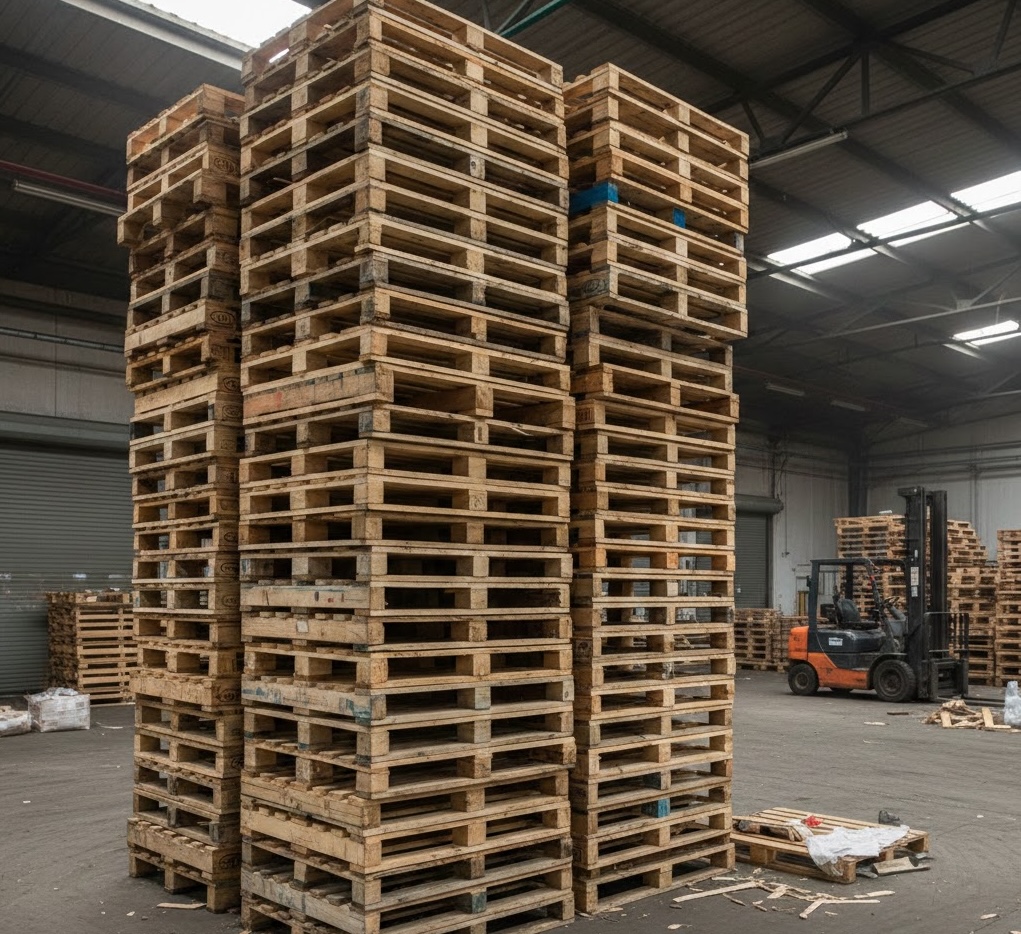
Premium Wood Pallets
Recycled hardwood and softwood pallets in all sizes
Get a Wood Pallet Quote
Tell us the size, grade, and quantity you need. We'll respond with competitive pricing within 24 hours.
Types of Wood Pallets
Wood pallets come in several structural designs, each engineered for different handling methods and load requirements.
Stringer Pallets
The most common type of wood pallet. Uses two or three parallel pieces of lumber (stringers) to support the deck boards. Stringer pallets are economical and widely available.
- 2-way or partial 4-way entry
- Most affordable option
- Standard in grocery and retail
- Easy to repair and recycle
- Notched stringers for 4-way forklift access
Block Pallets
Use cylindrical or rectangular blocks between the top and bottom deck boards. Block pallets provide true 4-way entry and are generally stronger than stringer pallets.
- True 4-way forklift entry
- Higher load capacity than stringer
- More stable for stacking
- Preferred for automated systems
- Common in European markets (EUR pallets)
Double-Face Pallets
Feature deck boards on both the top and bottom. Available in reversible (either side up) and non-reversible configurations. Excellent for heavy loads and conveyor systems.
- Deck boards on top and bottom
- Reversible or non-reversible
- Extra stability for heavy loads
- Ideal for conveyor systems
- Better weight distribution
Wing Pallets
Deck boards extend beyond the stringers or blocks, creating “wings” on each side. This provides extra surface area for oversized or irregular loads.
- Extended deck surface area
- Supports oversized loads
- Better for stretch wrapping
- Reduces product overhang
- Common in drum and barrel shipping
Skid Pallets
The original pallet design. Single-deck pallets with no bottom deck boards, resting directly on stringers or runners. Simple, lightweight, and economical.
- No bottom deck boards
- Lightest weight option
- Easiest to drag and slide
- Lowest material cost
- Ideal for light loads and storage
Solid Deck Pallets
Feature a continuous, gap-free deck surface made from plywood or oriented strand board (OSB). Prevents small items from falling through and provides a smooth, flat surface.
- No gaps in deck surface
- Prevents product drop-through
- Smooth surface for delicate items
- Easy to clean and sanitize
- Popular in food and pharmaceutical
Standard Pallet Sizes
We stock the most common pallet sizes in the United States and can source or build custom dimensions for any application.
| Size (inches) | Name / Standard | Common Industries | Availability |
|---|---|---|---|
| 48 x 40 | GMA / Grocery | Grocery, retail, general shipping | Most Common |
| 42 x 42 | Telecom / Paint | Telecom, paint, drums, barrels | High |
| 48 x 48 | Chemical / Beverage | Chemical, beverage, paper | High |
| 48 x 42 | Military / Automotive | Military, automotive parts | Medium |
| 40 x 48 | CMA Standard | Cement, building materials | Medium |
| 48 x 45 | Automotive | Automotive assembly, heavy parts | Medium |
| 44 x 44 | Drum Shipping | Chemical drums, heavy containers | Medium |
| 36 x 36 | Beverage Display | Retail floor displays, beverages | Medium |
| 48 x 36 | Beverage / Paper | Beverage, paper, textiles | Medium |
| Custom | Any Dimension | Any specialized application | Made to Order |
All sizes available in stringer and block configurations. Custom sizes can be produced in 5-7 business days.
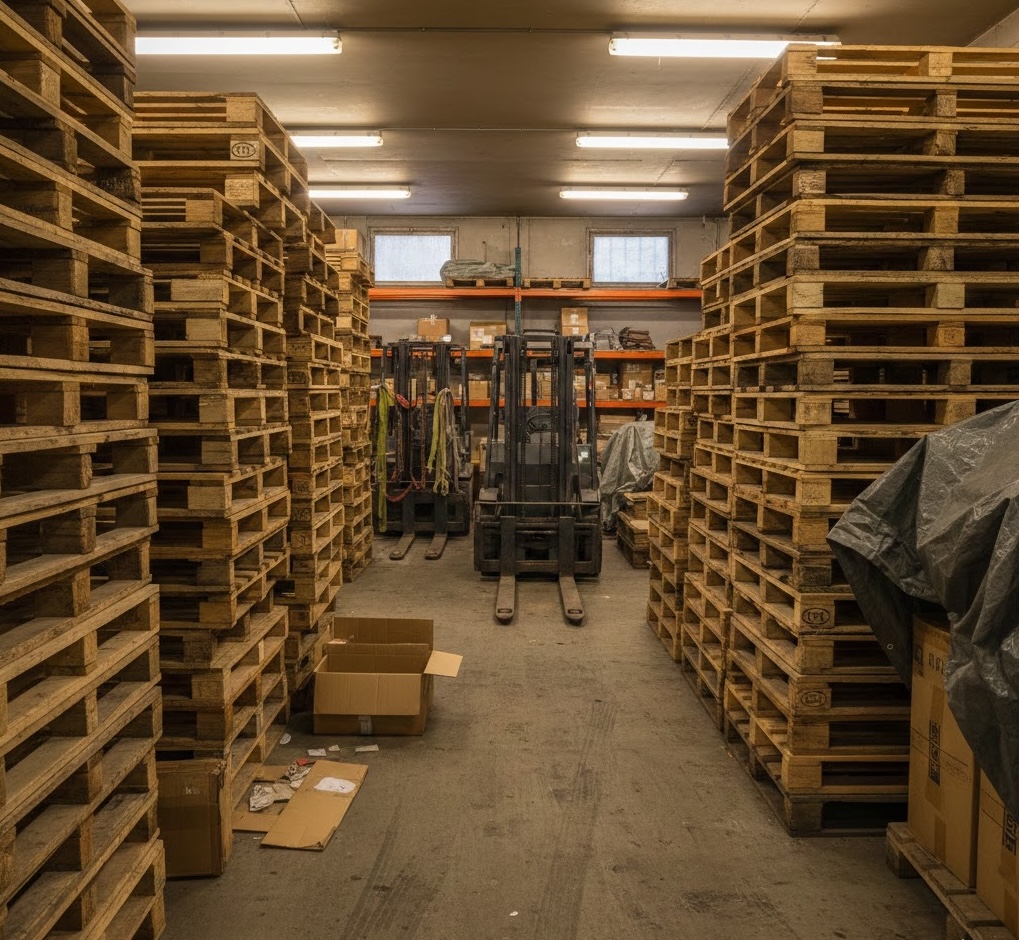
Warehouse-Ready Inventory
Our 200,000 sq ft Tampa facility keeps over 250,000 wood pallets in stock at all times. From standard GMA 48×40 to custom sizes, we have immediate availability for orders of any volume.
Wood Pallet Grades
Our three-tier grading system ensures you get the right quality at the right price. Every pallet is inspected before shipping.
Like New / Premium
Grade A pallets are in near-new condition. They have been used only once or twice and show virtually no signs of wear. These are the highest quality used pallets available.
Characteristics:
- No broken, cracked, or missing boards
- No protruding nails or staples
- No major staining or contamination
- Full structural integrity maintained
- Clean, professional appearance
- All original boards intact
Best For:
Export shipping, retail display, pharmaceutical, food industry, and any application where appearance and cleanliness matter.
Good Condition
Grade B pallets show normal signs of commercial use but remain fully functional. They are the most popular choice for businesses that want reliability without paying premium prices.
Characteristics:
- All boards present and structurally sound
- May have 1-2 repaired boards
- Minor cosmetic blemishes or staining
- No protruding nails (hammered flush)
- Full load capacity retained
- Light to moderate wear visible
Best For:
Warehousing, domestic shipping, distribution centers, and any standard commercial application. The best balance of price and quality.
Economy / Budget
Grade C pallets are the most affordable option. They have been through multiple use cycles and show significant wear, but they still meet the minimum structural requirements for safe use.
Characteristics:
- Multiple board repairs are common
- Visible weathering and discoloration
- May have ink stamps or markings
- Meets minimum structural standards
- Some boards may be mismatched
- Most budget-friendly pricing
Best For:
One-way shipping, internal warehouse storage, temporary use, DIY projects, and any application where budget is the primary concern.
Heat Treatment Options
Heat treatment (HT) is a mandatory process for wood pallets used in international shipping. The ISPM-15 standard requires that wood packaging materials be heated to a core temperature of 56 degrees Celsius for a minimum of 30 minutes to eliminate pests and pathogens.
ISPM-15 Compliance
All our heat-treated pallets carry the IPPC stamp, ensuring they meet international phytosanitary standards for wood packaging.
Pest Elimination
The heat treatment process kills insects, larvae, and fungal pathogens that may be present in wood, preventing the spread of invasive species.
Chemical-Free Process
Unlike methyl bromide fumigation, heat treatment uses no chemicals, making it safer for workers, products, and the environment.
Fast Turnaround
Our industrial kilns can process large volumes of pallets quickly. Heat treatment adds only 1-2 business days to your order.
Heat Treatment Quick Facts
Important: All heat-treated pallets receive the official IPPC/HT stamp. This mark is required by customs authorities worldwide and must be legible upon arrival.
Pallet Grade Detailed Breakdown
Understanding the exact criteria for each pallet grade helps you make informed purchasing decisions. Here is a comprehensive breakdown of what defines each grade in our system.
| Inspection Criteria | Grade A (Like New) | Grade B (Good) | Grade C (Economy) |
|---|---|---|---|
| Deck Boards | All original, no repairs | 1-2 repaired boards allowed | Multiple repairs, some mismatched |
| Stringer Condition | No damage, full integrity | Minor notch wear acceptable | Notch repairs, partial cracks okay |
| Protruding Nails | None — all flush | None — hammered flush | Inspected, addressed where found |
| Surface Staining | Minimal to none | Light staining acceptable | Heavy staining, ink marks common |
| Moisture Damage | No water damage or warping | Minor discoloration only | Surface weathering acceptable |
| Board Gaps | Uniform spacing, under 1/4 inch | Gaps up to 1/2 inch acceptable | Gaps up to 3/4 inch acceptable |
| Weight Capacity Retained | 100% of original rating | 100% of original rating | Minimum structural standards met |
| Appearance | Near-new, clean, professional | Used but presentable | Obviously used, functional |
| Typical Price (48x40) | $9 - $14 per pallet | $6 - $10 per pallet | $4 - $7 per pallet |
| Ideal Applications | Export, retail, food, pharma | Warehousing, domestic shipping | One-way trips, storage, DIY |
Common Pallet Problems & Solutions
Wood pallets are incredibly versatile, but they can develop issues over time. Knowing how to identify and address common problems helps you maximize pallet lifespan and maintain safety.
Broken or Cracked Deck Boards
Overloading, forklift impact, or repeated stress from point loads concentrated on individual boards.
Replace broken boards promptly. A single broken board can usually be replaced in under 5 minutes with basic tools. If more than 3 boards are broken, consider replacing the entire pallet.
Distribute loads evenly across the entire deck surface. Avoid dropping heavy items onto the pallet. Use layer pads between product rows.
Protruding Nails or Staples
Repeated impacts and vibration during transport work fasteners loose over time. Changes in humidity cause wood to swell and shrink, loosening nail grip.
Hammer protruding nails flush immediately. For repeatedly loose nails, use ring-shank nails or screws that grip the wood fibers more securely.
Inspect pallets before each use. Use pallets appropriate for the load weight. Avoid excessive stacking of empty pallets.
Mold and Fungal Growth
Storing pallets in damp conditions without adequate airflow. Wood pallets that get wet and cannot dry quickly are susceptible to mold, especially in warm climates.
Clean affected pallets with a commercial mold remover or diluted bleach solution. Dry thoroughly before returning to service. For food-grade applications, replace moldy pallets entirely.
Store pallets indoors or under cover. Ensure adequate ventilation in storage areas. Rotate stock to prevent long-term moisture exposure.
Warping and Dimensional Changes
Uneven moisture exposure causes boards to warp. Storing loaded pallets unevenly or supporting heavy loads on only part of the pallet causes permanent bowing.
Mildly warped pallets can sometimes be flattened by stacking heavy loads evenly on top. Severely warped pallets should be disassembled for parts or recycled.
Store pallets on flat, level surfaces. Distribute loads evenly. Keep pallets dry and avoid direct sun exposure on one side only.
Stringer Damage or Cracks
Forklift tines hitting stringers at the wrong angle, overloading, or dropping loaded pallets from height. Stringers are the structural backbone of the pallet.
Minor stringer notch damage can be reinforced with a repair plate. Full stringer cracks typically require pallet replacement, as the structural integrity is compromised.
Train forklift operators to enter fork pockets squarely. Never exceed rated load capacity. Handle pallets carefully during transport.
Insect Infestation
Wood pallets can harbor insects, particularly when stored outdoors in warm climates. Non-heat-treated pallets are more susceptible to wood-boring insects.
Heat treatment to ISPM-15 standards (56 degrees C for 30 minutes) eliminates all insects and larvae. Infested pallets should be heat-treated or disposed of properly.
Use heat-treated pallets when possible. Store pallets off the ground and away from vegetation. Inspect incoming pallets for signs of insect activity.
The Wood Pallet Lifecycle
A wood pallet's journey is a perfect example of the circular economy in action. From forest to final recycling, every stage adds value and minimizes waste.
Sustainable Harvesting
Pallet lumber comes primarily from sustainably managed forests and sawmill byproducts. Many pallet boards are cut from the outer portions of logs that cannot be used for higher-grade lumber, ensuring no wood goes to waste.
Manufacturing & First Use
Raw lumber is cut, assembled, and fastened into pallets using automated nailing equipment. New pallets enter the supply chain carrying their first load, beginning a lifecycle that spans multiple years and dozens of trips.
Reuse, Repair, & Regrade
After initial use, pallets are collected, inspected, and sorted. Damaged boards are replaced, fasteners are secured, and pallets are regraded. A single pallet can go through 7-10 repair cycles before the wood is finally exhausted.
End-of-Life Recycling
When a pallet can no longer be repaired, the wood is chipped and repurposed as landscaping mulch, animal bedding, particleboard, or biofuel. Metal fasteners are magnetically separated and recycled. Nothing reaches the landfill.
Uses & Applications
Wood pallets serve virtually every industry. Here are the most common applications for our recycled wood pallets.
Warehousing & Storage
Organize inventory efficiently with standardized pallet sizes. Stack goods safely and maximize vertical storage space.
Shipping & Freight
The backbone of domestic and international logistics. Wood pallets enable efficient loading, transport, and unloading of goods.
Retail & Display
Grade A pallets work beautifully for retail floor displays at grocery stores, home improvement centers, and warehouse clubs.
Manufacturing
Move raw materials and finished products throughout production lines. Wood pallets integrate with forklifts, conveyors, and pallet jacks.
Agriculture
Transport produce, feed, and supplies. Wood pallets are the preferred choice for agricultural logistics due to cost and availability.
Construction
Move heavy building materials like bricks, concrete blocks, and lumber safely. Block pallets are ideal for construction site demands.
Food & Beverage
Safely move food products through the supply chain. Grade A and heat-treated pallets meet food safety requirements.
DIY & Upcycling
Grade C pallets are popular for creative projects, from furniture to garden planters. Affordable and widely available.
Environmental Benefits of Recycled Wood Pallets
Pallet recycling saves an estimated 3.5 billion board feet of lumber annually in the United States alone.
Over 500 million pallets are recovered and recycled each year, keeping massive volumes of wood out of landfills.
Approximately 70% of all wood pallets in circulation are eventually recovered for reuse, repair, or material recycling.
The pallet recycling industry preserves an estimated 27 million trees annually by reusing existing wood resources.
Recycling and repairing a wood pallet uses approximately 85% less energy than manufacturing a new one from raw lumber.
Even when a pallet reaches end of life, the wood can be chipped for mulch, animal bedding, biofuel, or composite materials.
What Affects Pricing
Wood pallet prices vary based on several factors. Understanding these helps you make the most cost-effective choice for your needs.
Grade / Condition
Grade A (like new) costs the most, followed by Grade B (good condition) and Grade C (economy). The grade you choose should match your application requirements.
Size & Dimensions
Standard 48x40 GMA pallets are the most affordable due to high availability. Non-standard or custom sizes cost more because of lower supply and potential custom manufacturing.
Pallet Type
Stringer pallets are typically less expensive than block pallets. Double-face and solid deck pallets use more material and cost accordingly.
Order Quantity
Volume discounts are available for larger orders. Truckload quantities (typically 400-800 pallets) offer the best per-unit pricing.
Treatment Requirements
Heat treatment for ISPM-15 compliance, kiln drying, or special coatings add to the base price. These treatments are essential for export and certain industries.
Delivery Distance
Transportation costs depend on distance from our facility to your location. We optimize logistics to keep delivery costs as low as possible.
Ready for an exact quote? Fill out our form above or contact us directly for volume pricing.
Get Your Free QuoteWood Species Used in Pallets
The type of wood used in a pallet affects its strength, weight, cost, and suitability for different applications. Here are the most common species found in pallet manufacturing.
Softwood Species
Most Common for Pallet Construction
Softwoods account for approximately 80% of all pallet lumber in the United States. They grow faster, cost less, and are easier to work with than hardwoods, making them the preferred choice for standard pallet manufacturing.
Southern Yellow Pine (SYP)
Strength: HighThe most widely used pallet wood in the southeastern U.S. Excellent strength-to-cost ratio, readily accepts heat treatment, and is abundantly available.
Spruce-Pine-Fir (SPF)
Strength: MediumA lumber grouping common in northern states and Canada. Lightweight and easy to nail, making it ideal for high-volume pallet production.
Douglas Fir
Strength: HighStrong and dense for a softwood, commonly used in western U.S. pallet manufacturing. Offers superior load-bearing capacity.
White Pine
Strength: Low-MediumVery lightweight and easy to handle. Lower strength than SYP but ideal for light-duty pallets and applications where weight matters.
Hardwood Species
For Heavy-Duty Applications
Hardwood pallets offer superior strength and durability compared to softwood alternatives. They are preferred for heavy loads, multi-trip use, and applications where structural demands exceed what softwood can handle.
Red Oak
Strength: Very HighThe most common hardwood used in pallets. Very strong and dense, excellent for block pallets and heavy-duty applications. Often used in automotive manufacturing.
White Oak
Strength: Very HighEven stronger than red oak with natural resistance to moisture and decay. Preferred for outdoor storage and wet environments.
Maple
Strength: Very HighExtremely hard and impact-resistant. Used in pallets for the heaviest loads such as steel coils, engine blocks, and heavy machinery.
Mixed Hardwood
Strength: HighMany pallets use a mix of available hardwood species. These offer better strength than softwood at a lower cost than single-species hardwood pallets.
Softwood vs. Hardwood: Quick Comparison
| Attribute | Softwood | Hardwood |
|---|---|---|
| Cost | Lower | Higher |
| Weight | Lighter | Heavier |
| Strength | Good | Excellent |
| Nail Holding | Moderate | Superior |
| Availability | Very High | Moderate |
| Best For | General use, light-medium loads | Heavy loads, multi-trip use |
Complete Size & Weight Guide
Detailed dimensions, weight capacities, and typical pallet weights for all standard sizes we carry.
| Size (L x W) | Height | Pallet Weight | Dynamic Load | Static Load | Racking Load |
|---|---|---|---|---|---|
| 48" x 40" | 6.5" | 33-48 lbs | 2,800 lbs | 5,000 lbs | 2,200 lbs |
| 42" x 42" | 5.5" | 35-45 lbs | 2,500 lbs | 4,500 lbs | 2,000 lbs |
| 48" x 48" | 6.5" | 40-55 lbs | 2,800 lbs | 5,500 lbs | 2,200 lbs |
| 48" x 42" | 6" | 37-50 lbs | 2,600 lbs | 4,800 lbs | 2,000 lbs |
| 40" x 48" | 6.5" | 33-48 lbs | 2,800 lbs | 5,000 lbs | 2,200 lbs |
| 48" x 45" | 6" | 38-52 lbs | 2,700 lbs | 5,200 lbs | 2,100 lbs |
| 44" x 44" | 5.5" | 36-48 lbs | 2,500 lbs | 4,800 lbs | 2,000 lbs |
| 36" x 36" | 5" | 25-35 lbs | 2,000 lbs | 3,500 lbs | 1,600 lbs |
| 48" x 36" | 6" | 30-42 lbs | 2,400 lbs | 4,200 lbs | 1,800 lbs |
Load capacities are for standard stringer pallets in Grade A condition. Block pallets and hardwood pallets may have higher ratings. Contact us for specific capacity requirements.
Wood Pallets by Industry
Different industries have different pallet requirements. Here is what we recommend for each sector based on decades of experience.
Food & Beverage
- Grade A preferred for direct food contact applications
- ISPM-15 heat treatment mandatory for export
- No chemical treatment or contamination
- Clean, stain-free surfaces for FSMA compliance
- Solid deck options for small item packaging
Food-grade pallets undergo additional inspection for cleanliness and structural integrity.
Pharmaceutical
- GMP-compatible clean surfaces required
- No visible contamination or foreign materials
- Consistent dimensions for automated systems
- Traceability documentation available
- Solid deck preferred for clean room environments
Pharmaceutical pallets are individually inspected and wrapped for transport.
Retail & Distribution
- GMA 48x40 standard for retail supply chains
- Grade A for retail floor displays
- Grade B for warehouse and distribution use
- Consistent quality for automated DC systems
- High volume availability year-round
We maintain large inventories of GMA-standard pallets for rapid fulfillment.
Industrial & Manufacturing
- Heavy-duty construction for industrial loads
- Hardwood available for extreme weight requirements
- Custom sizes for oversized machinery and parts
- Double-face pallets for conveyor compatibility
- Economy grades suitable for internal use
Custom hardwood pallets available for loads exceeding standard capacity ratings.
Maintenance & Care Tips
Proper handling and storage can significantly extend the useful life of your wood pallets, reducing replacement costs and waste. Follow these best practices to maximize your pallet investment.
Store Pallets Indoors When Possible
Exposure to rain, snow, and direct sunlight accelerates wood degradation. Indoor storage can double the lifespan of your pallet inventory.
Inspect Before Each Use
Check for broken boards, protruding nails, and structural damage before loading. Using a damaged pallet risks product damage, worker injury, and load failure.
Do Not Overload Beyond Rated Capacity
Every pallet has a rated dynamic, static, and racking load capacity. Exceeding these limits causes board breakage and can create dangerous conditions.
Stack Empty Pallets Properly
Stack empty pallets on flat, level surfaces. Keep stacks under 15 pallets high. Align pallets evenly to prevent leaning and toppling.
Repair Minor Damage Promptly
A single broken board caught early can be replaced quickly and cheaply. Ignored damage tends to spread, eventually making the pallet unsalvageable.
Rotate Your Pallet Stock
Use a first-in, first-out system for your pallet inventory. This ensures even wear across your stock and prevents pallets from sitting unused and deteriorating.
When to Replace vs. Repair
Repair When:
- 1-2 deck boards are cracked or broken
- Nails have worked loose but structure is sound
- Minor stringer damage (notch repair possible)
- Surface contamination that can be cleaned
Replace When:
- Stringer is cracked through or broken
- More than 3 deck boards need replacement
- Significant rot, mold, or fungal growth
- Pallet is warped beyond flat tolerance
- Load capacity is compromised
Our pallet repair service can handle everything from single board replacements to full refurbishment. We also accept end-of-life pallets for recycling.
Environmental Certifications & Standards
Our wood pallets meet or exceed the industry's most important environmental and quality certifications, ensuring compliance for every application.
ISPM-15 / IPPC Certified
All heat-treated pallets meet the International Standards for Phytosanitary Measures No. 15, the globally recognized standard for wood packaging in international trade. Pallets carry the official IPPC stamp.
SFI / PEFC Chain of Custody
We source lumber from suppliers participating in the Sustainable Forestry Initiative and Programme for the Endorsement of Forest Certification, ensuring responsible forest management practices.
NWPCA Quality Standards
Our pallets meet the National Wooden Pallet and Container Association standards for uniform quality, structural integrity, and proper grading. We follow NWPCA best practices for manufacturing and recycling.
EPA SmartWay Partner
Our transportation and logistics operations participate in the EPA SmartWay program, optimizing freight efficiency and reducing greenhouse gas emissions from pallet delivery operations.
Zero Waste Commitment
100% of materials from end-of-life pallets are recovered. Wood is chipped for mulch, animal bedding, or biofuel. Metal fasteners are recycled. Nothing goes to landfill from our recycling process.
Carbon Offset Tracking
We calculate and report the carbon savings from every pallet we recycle compared to new pallet manufacturing. Customers receive annual sustainability impact reports for ESG reporting purposes.
Ready to Order Wood Pallets?
From single stacks to full truckloads, we supply wood pallets in every size and grade. Get started with a free quote today.